X
  • About
  • Advertise
  • Contact
Get the latest news! Subscribe to the SMSF Adviser bulletin
  • News
    • Money
    • Education
    • Strategy
  • Webcasts
  • Features
  • Events
  • Podcasts
  • Promoted Content
No Results
View All Results
  • News
    • Money
    • Education
    • Strategy
  • Webcasts
  • Features
  • Events
  • Podcasts
  • Promoted Content
No Results
View All Results
Home News

‘Don’t use super as a substitute for public health,’ government warned

Before broadening access to superannuation for medical purposes, the government should first look at ensuring the public health system is doing the job of providing critical services, according to one technical expert.

by Miranda Brownlee
February 1, 2018
in News
Reading Time: 2 mins read
Share on FacebookShare on Twitter

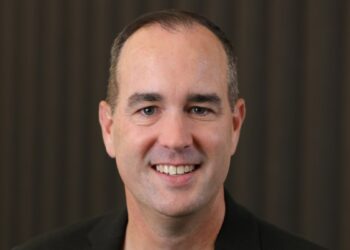
Miller Super Solutions founder Tim Miller said there is more to consider with the government’s consultation on conditions of release for compassionate grounds and financial hardship, than the emotive side.

“That’s not to suggest that there shouldn’t be measures in place to allow those in need to access to their superannuation benefits, however, there are alternative measures that should also be considered,” said Mr Miller.

X

One of the points raised in the government’s consultation paper about releasing benefits under compassionate grounds, he explained, is that to apply for a release for medical treatment, the treatment required is not readily available through the public health system.

“Shouldn’t we therefore consider reviewing the public health system rather the superannuation access rules? Clearly I’m just playing the devil’s advocate but it seems that superannuation is the solution to problems not created by the superannuation system,” he said.

“Extending the grounds to incorporate more treatment-based services, such as dentistry, is, as stated above, a public health issue and not a superannuation issue.”

Mr Miller also said the current process under which treatments are assessed for their ability to alleviate acute or chronic paid could also be made more consistent.

“One element of the current condition requires an assessment about the treatment’s ability to alleviate acute or chronic pain. The current assessment determining the level of pain is subjective whereas the Sole Purpose Test is objective, and any ancillary benefit should also be objectively tested,” he explained.

If there is an objective test, which would most likely be in the hands of the regulator, or perhaps practitioners that are registered with the regulator, then perhaps there will be some consistency across the assessment process, he said.

“Granted it may be a stretch requiring medical practitioners to register with the ATO as an approved practitioner but at the very least they should be an Australian-based and registered practice, effectively outlawing releasing super benefits for overseas medical treatment with exclusions for rare illnesses and injuries treatable only overseas,” he said.

 

Tags: News

Related Posts

Aaron Dunn, CEO, Smarter SMSF

Looking at future direction of trustee education directives

by Keeli Cambourne
December 23, 2025

Aaron Dunn, CEO of Smarter SMSF, said he anticipates that now the ATO has a tool available and there is...

Look at all ingoings into fund to ensure contributions are effective

by Keeli Cambourne
December 23, 2025

Matthew Richardson, SMSF manager for Accurium, said on a recent webinar that there are a number of elements which may...

What was the biggest challenge the SMSF sector faced in 2025?

by Keeli Cambourne
December 23, 2025

Peter Burgess, CEO, SMSF Association Uncertainty surrounding Division 296 cast a shadow over the sector for much of 2025. The...

Leave a Reply Cancel reply

Your email address will not be published. Required fields are marked *

Join our newsletter

View our privacy policy, collection notice and terms and conditions to understand how we use your personal information.
SMSF Adviser is the authoritative source of news, opinions and market intelligence for Australia’s SMSF sector. The SMSF sector now represents more than one million members and approximately one third of Australia's superannuation savings. Over the past five years the number of SMSF members has increased by close to 30 per cent, highlighting the opportunity for engaged, informed and driven professionals to build successful SMSF advice business.

Subscribe to our newsletter

View our privacy policy, collection notice and terms and conditions to understand how we use your personal information.

About Us

  • About
  • Advertise
  • Contact
  • Terms & Conditions
  • Privacy Collection Notice
  • Privacy Policy

Popular Topics

  • News
  • Strategy
  • Money
  • Podcasts
  • Promoted Content
  • Feature Articles
  • Education
  • Video

© 2025 All Rights Reserved. All content published on this site is the property of Prime Creative Media. Unauthorised reproduction is prohibited

No Results
View All Results
NEWSLETTER
  • News
  • Money
  • Education
  • Strategy
  • Webcasts
  • Features
  • Events
  • Podcasts
  • Promoted Content
  • About
  • Advertise
  • Contact Us

© 2025 All Rights Reserved. All content published on this site is the property of Prime Creative Media. Unauthorised reproduction is prohibited