X
  • About
  • Advertise
  • Contact
Get the latest news! Subscribe to the SMSF Adviser bulletin
  • News
    • Money
    • Education
    • Strategy
  • Webcasts
  • Features
  • Events
  • Podcasts
  • Promoted Content
No Results
View All Results
  • News
    • Money
    • Education
    • Strategy
  • Webcasts
  • Features
  • Events
  • Podcasts
  • Promoted Content
No Results
View All Results
Home News

Past convictions still a trap with SMSF set-ups, practitioners warned

While the ATO’s disqualified trustees register has made it easier to identify clients with previous disqualifications, it is vital that SMSF professionals still check for other factors preventing an individual from becoming a trustee, including convictions for dishonesty offences, a law firm warns.

by Miranda Brownlee
May 17, 2019
in News
Reading Time: 3 mins read
Share on FacebookShare on Twitter

Earlier this month, the ATO published its disqualified trustees register to enable SMSF professionals to search for disqualified trustees.

This was in response to feedback from the sector indicating that it was difficult to determine if a new client had been disqualified. Individuals who have previously been disqualified by a court or a regulator are not eligible to be trustees or directors of a super fund.

X

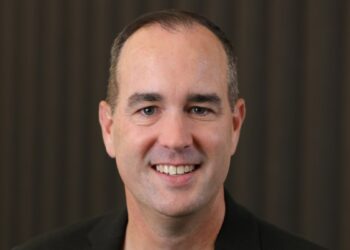
DBA Lawyers director Daniel Butler said that, while the register will help SMSF professionals to identify individuals that were previously disqualified when setting up a fund or adding a member, there are a number of other checks that still need to be undertaken in addition to this.

The ATO states on its website that a person is not eligible to be an individual trustee or director of the corporate trustee if they have been convicted of an offence involving dishonesty, have been subject to a civil penalty under the super laws or are insolvent under administration including being an undischarged bankrupt.

Mr Butler said that, while it may be relatively easy to find out if a trustee has been disqualified by the ATO or that they’re bankrupt, it can be very difficult to find out if a client was convicted of an offence involving dishonesty.

Under the Superannuation Industry (Supervision) Act 1993, Mr Butler said the definition of an offence extends the definition to anyone convicted at any time under a law of the Commonwealth, a state, a territory or a foreign country.

This means that regardless of where a conviction was recorded or when, he said, it will be relevant to determining whether the person is a disqualified person.

The SISA also expressly excludes the law on spent convictions, he said, where after a period of time, typically 10 years, they’re taken off the record.

Accordingly, spent convictions are still relevant for determining whether a person is a disqualified one, he noted.

“Spent convictions are available under certain state, federal and overseas legislation that generally prohibit the disclosure of offences in some circumstances. In some cases, a conviction that is more than 10 years old may no longer require disclosure,” Mr Butler explained.

In AAT Case 60/96 96 ATC 560, the Administrative Appeals Tribunal affirmed the disqualification of a trustee who had been convicted and paid a monetary fine in the United Kingdom in 1969 due to fraudulent insurance claims.

“The tribunal confirmed offences involving dishonest conduct committed prior to SISA and overseas were otherwise covered even though the offence was a spent conviction under UK legislation,” he said.

Advisers, he said, should have a checklist that compels trustees to consider these issues for each newly established SMSF.

They may also want to consider these issues in relation to estate and succession planning in terms of checking whether all proposed, current and future successor trustees have been vetted to ensure they are not disqualified persons, Mr Butler said.

Related Posts

Aaron Dunn, CEO, Smarter SMSF

Looking at future direction of trustee education directives

by Keeli Cambourne
December 23, 2025

Aaron Dunn, CEO of Smarter SMSF, said he anticipates that now the ATO has a tool available and there is...

Look at all ingoings into fund to ensure contributions are effective

by Keeli Cambourne
December 23, 2025

Matthew Richardson, SMSF manager for Accurium, said on a recent webinar that there are a number of elements which may...

What was the biggest challenge the SMSF sector faced in 2025?

by Keeli Cambourne
December 23, 2025

Peter Burgess, CEO, SMSF Association Uncertainty surrounding Division 296 cast a shadow over the sector for much of 2025. The...

Leave a Reply Cancel reply

Your email address will not be published. Required fields are marked *

Join our newsletter

View our privacy policy, collection notice and terms and conditions to understand how we use your personal information.
SMSF Adviser is the authoritative source of news, opinions and market intelligence for Australia’s SMSF sector. The SMSF sector now represents more than one million members and approximately one third of Australia's superannuation savings. Over the past five years the number of SMSF members has increased by close to 30 per cent, highlighting the opportunity for engaged, informed and driven professionals to build successful SMSF advice business.

Subscribe to our newsletter

View our privacy policy, collection notice and terms and conditions to understand how we use your personal information.

About Us

  • About
  • Advertise
  • Contact
  • Terms & Conditions
  • Privacy Collection Notice
  • Privacy Policy

Popular Topics

  • News
  • Strategy
  • Money
  • Podcasts
  • Promoted Content
  • Feature Articles
  • Education
  • Video

© 2025 All Rights Reserved. All content published on this site is the property of Prime Creative Media. Unauthorised reproduction is prohibited

No Results
View All Results
NEWSLETTER
  • News
  • Money
  • Education
  • Strategy
  • Webcasts
  • Features
  • Events
  • Podcasts
  • Promoted Content
  • About
  • Advertise
  • Contact Us

© 2025 All Rights Reserved. All content published on this site is the property of Prime Creative Media. Unauthorised reproduction is prohibited