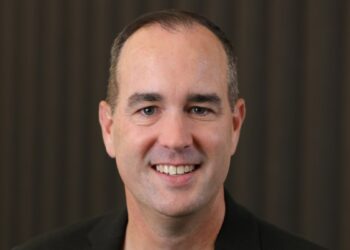
Speaking on the latest FirstTech podcast, Linda Bruce, Senior Manager Technical Services for Colonial First State, said for a member of an SMSF to meet the terminal medical condition, they are required to obtain medical certificates from two registered medical practitioners and at least one of them is a specialist in that medical filed.
“These two medical practitioners must have certified jointly or separately that the client suffers from an illness, or has incurred an injury, that y is likely to result in the death within a certain period,” she said.
“Now this period is referred to as the certification period, and it must be less than 24 months from the date of the certification.
“If all those conditions can be met, then the client can satisfy the terminal medical condition of release.”
A terminal medical condition of release is not subject to any cashing restrictions said Ms Bruce, which means a client can access the benefit as a lump sum, a pension or a combination of both.
She said there is a common misunderstanding from some advisers that their clients can only access their super on the grounds of a terminal medical condition if the client holds a life insurance policy through super that has a terminal illness benefit included as part of the conditions or features of that policy.
However, Ms Bruce said that is not the case.
“As long as the client with the terminal medical condition has all the documentation on hand, it allows them to access any of their accumulated benefit, as well as any insurance paid,” she said.
“But it doesn’t matter if they actually hold any life insurance policies.”
Often clients suffering from a terminal illness want to withdraw some or all of their benefits from Super as a lump sum to pay for medical expenses or to pay off the mortgage on the family home to leave their beneficiaries, unencumbered.
Ms Bruce said when a client takes a lump sum withdrawal within the certification period, specified by the doctors and specialists, those lump sum withdrawals are completely tax free, regardless of the client’s age.
“Even if the client suffers from a terminal illness in their 20s 30s or 40s. It doesn’t matter. Those lump sum withdrawals are completely tax-free,” she said.
“However, just be careful, though. Although it is good news for the client to sometimes survive the certification period, if that happens and the client takes the lump sum withdrawals from the existing unrestricted non-preserved benefit, the lump sum withdrawals made after the certification period expires will be subject to the normal (super lump sum) tax.
“This means that if the client is under their preservation age, the taxable taxed elements will be taxed at up to 20 per cent plus Medicare levy.
Different rules apply if the client takes the money as an income stream such as an account-based pension.
“An account-based pension commenced on the ground of terminal medical condition is a retirement phaseincome stream, which means that the investment earnings are tax free in the pension account,” Ms Bruce said.
“However, if the client is young, and they’re under preservation age, when they commence a pension under a terminal medical condition, be careful as the taxable taxed elements of the pension withdrawals will be taxed at their marginal tax rate – they do not get the 15 per cent pension tax offset until they reach their preservation age.”
In comparison, different rules apply if the client meets the permanent incapacity condition of release instead of the terminal medical condition. If the client under the preservation age commences an account base pension using the permanent incapacity condition instead, the 15 per cent pension tax offset can be applied to the pension payments, in terms of the taxable component.
“Lump sum withdrawal is taxed differently under the permanent capacity conditional release. For a lump sum, there’s a tax-free uplift to increase the tax-free component, but the remaining taxable components where the clients are under the preservation age are taxed up to 20 per cent plus Medicare levy,” Ms Bruce said.