X
  • About
  • Advertise
  • Contact
Get the latest news! Subscribe to the SMSF Adviser bulletin
  • News
    • Money
    • Education
    • Strategy
  • Webcasts
  • Features
  • Events
  • Podcasts
  • Promoted Content
No Results
View All Results
  • News
    • Money
    • Education
    • Strategy
  • Webcasts
  • Features
  • Events
  • Podcasts
  • Promoted Content
No Results
View All Results
Home News

Exemption to work test can allow for 1 last contribution: adviser

A work test is still required if a member takes a personal tax deduction once they reach the age of 67, a leading industry adviser has said, however, there is an exemption to this rule.

by Keeli Cambourne
September 3, 2025
in News
Reading Time: 2 mins read
Share on FacebookShare on Twitter

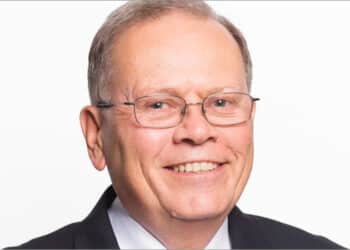
David Busoli, principal of SMSF Alliance, said a work test exemption allows eligible individuals to make personal concessional contributions for one additional year, provided several conditions are met.

“Firstly, they have to have met the work test in the financial year immediately prior to the year in which the contribution is made. Additionally, their total super balance at the previous 30 June has to be under $300,000, and they must not have used the exemption previously,” Busoli said.

X

Busoli continued that this exemption is particularly useful for clients transitioning out of the workforce who want to make one last deductible contribution, even if they don’t work in that year.

He continued that to satisfy the “work test”, a member must be “gainfully employed” for at least 40 hours within 30 consecutive days in a financial year.

“The work test can be satisfied at any time during the financial year, even after the contribution is made, provided it is within the same financial year as the contribution,” he said.

However, he said that being gainfully employed means being employed or self-employed for gain or reward in any business, trade, profession, occupation or employment and does not include voluntary or unpaid work.

“While not generally a common law employee, particularly in the case of a non-executive director who does not engage in the day-to-day management of the organisation, a director of a company is specifically included as an employee for SIS purposes provided the director is entitled to payment for their duties as a director.”

“This is irrespective of whether the company is carrying on a business or not. A self-employed person would need to be carrying on a business.”

Furthermore, he said that while gain or reward is not specifically defined in the SIS regulations, it would include remuneration such as salary or wages, directors’ fees, business income, bonuses, commissions, fees or gratuities which have been obtained in return for personal exertion.

“Unpaid work does not meet the definition of gainfully employed.”

“Also, work can be undertaken overseas, though residency matters may arise.
Tags: ContributionsNewsSuperannuation

Related Posts

PBR takes hard line on death benefit dependant criteria

by Keeli Cambourne
December 18, 2025

In a recent private binding ruling (1052395100997) the commissioner found the beneficiary applicant was not in an interdependent relationship nor...

MYEFO reveals super tax revenue predicted to fall $600m next year

by Keeli Cambourne
December 18, 2025

Treasury released its mid-year update yesterday with figures revealing the changes to the $3 million super tax legislation and the...

Two choices for tax purposes with lump sum disability payment

by Keeli Cambourne
December 18, 2025

Mark Gleeson, senior technical manager for MLC, said on a recent webinar that those choices are either taking a disability...

Leave a Reply Cancel reply

Your email address will not be published. Required fields are marked *

Join our newsletter

View our privacy policy, collection notice and terms and conditions to understand how we use your personal information.
SMSF Adviser is the authoritative source of news, opinions and market intelligence for Australia’s SMSF sector. The SMSF sector now represents more than one million members and approximately one third of Australia's superannuation savings. Over the past five years the number of SMSF members has increased by close to 30 per cent, highlighting the opportunity for engaged, informed and driven professionals to build successful SMSF advice business.

Subscribe to our newsletter

View our privacy policy, collection notice and terms and conditions to understand how we use your personal information.

About Us

  • About
  • Advertise
  • Contact
  • Terms & Conditions
  • Privacy Collection Notice
  • Privacy Policy

Popular Topics

  • News
  • Strategy
  • Money
  • Podcasts
  • Promoted Content
  • Feature Articles
  • Education
  • Video

© 2025 All Rights Reserved. All content published on this site is the property of Prime Creative Media. Unauthorised reproduction is prohibited

No Results
View All Results
NEWSLETTER
  • News
  • Money
  • Education
  • Strategy
  • Webcasts
  • Features
  • Events
  • Podcasts
  • Promoted Content
  • About
  • Advertise
  • Contact Us

© 2025 All Rights Reserved. All content published on this site is the property of Prime Creative Media. Unauthorised reproduction is prohibited