X
  • About
  • Advertise
  • Contact
Get the latest news! Subscribe to the SMSF Adviser bulletin
  • News
    • Money
    • Education
    • Strategy
  • Webcasts
  • Features
  • Events
  • Podcasts
  • Promoted Content
No Results
View All Results
  • News
    • Money
    • Education
    • Strategy
  • Webcasts
  • Features
  • Events
  • Podcasts
  • Promoted Content
No Results
View All Results
Home Strategy

Contribution caps finally on the rise

Following a temporary freeze on the indexation of the concessional contribution caps for two years, the 2014/2015 financial year will finally see an indexation increase of the current $25,000 cap.

by Aaron Dunn
March 5, 2014
in Strategy
Reading Time: 2 mins read
Share on FacebookShare on Twitter

Following a temporary freeze on the indexation of the concessional contribution caps for two years by the former Labor government, the 2014/2015 financial year will finally see an indexation increase of the current $25,000 cap up to $30,000.

The Australian Taxation Office has recently updated its key rates and thresholds, confirming the indexation of the concessional contribution cap. It is important to note that the indexation will not apply to the temporary higher cap of $35,000 currently available to those individuals 59 and over as at 30 June 2013 (for 2013/2014).

However, this temporary higher cap will extend to individuals 49 and over at 30 June 2014 to apply for the 2014/2015 financial year.

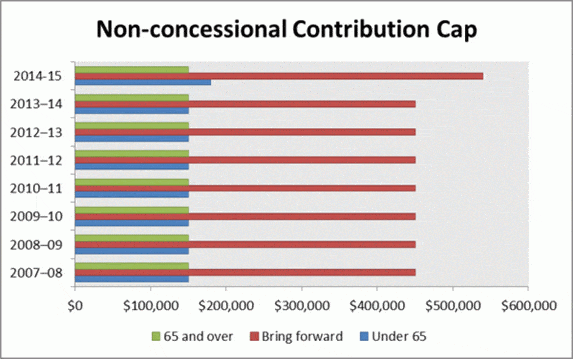
This indexation of the concessional contribution cap has some important additional flow-on effects to the non-concessional contribution cap (NCC), with this post-tax contribution cap being calculated as six times the concessional contribution cap.

Therefore, from 1 July 2014 the non-concessional contribution cap will increase to $180,000. Those individuals under age 65 at 1 July 2014 will be eligible to utilise a higher bring-forward amount of $540,000(up from $450,000).

The concessional contribution caps, since introduced on 1 July 2007 have changed constantly, mostly in a negative sense, having reduced substantially from $100,000 for individuals aged 50 and over back in 2007/2008 and 2008/2009. The table below shows the history of both the concessional and non-concessional contribution caps so it can be better understood why many people have been frustrated in making contributions into superannuation.
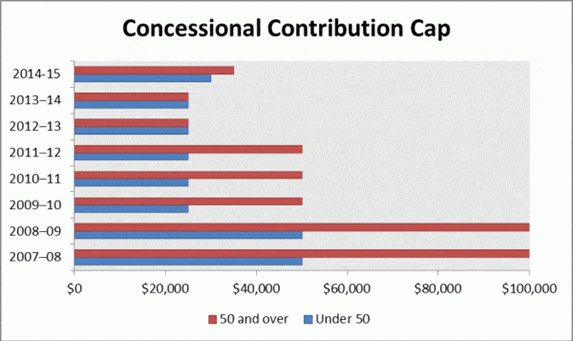
Concessional contribution cap

Source: The Dunn Thing

Non-concessional contribution cap

Source: The Dunn Thing

X

This increase will bring a range of changes to various contribution strategies for self-managed super fund members, so it is important to start thinking about the planning of these increases in readiness for the 2014/2015 financial year.

Aaron Dunn is managing director at the SMSF Academy and author of The Dunn Thing 

Related Posts

SMSF super splits, the tips and traps – Part 2

by William Fettes director DBA Lawyers
December 20, 2025

Part 1 focused on the compliance and procedural requirements under Division 7A.2 of the Superannuation Industry (Supervision) Regulations 1994 (Cth)...

The consequences of underpaying a pension

by Shelley Banton, director, Super Clarity
December 18, 2025

TR 2013/5 was updated in June 2024, introducing a new approach to processing underpaid pensions, requiring SMSF trustees and professionals...

5 investment themes to dominate markets in 2026

by Billy Leung senior investment strategist Global X
December 13, 2025

Gold and silver will potentially set fresh highs as part of a broader ongoing move to safe-haven assets, while the...

Comments 2

  1. Lach says:
    12 years ago

    On the NCC Cap chart above, is the 2014-15 green bar meant to be $180,000 also? Or is this an exception to the increases?

    Rob, my understanding is no you cannot top up. If you’ve triggered the $450,000, then $450,000 limit applies until expiry.

    Reply
  2. Rob says:
    12 years ago

    Good news at last.
    What would be great to know is. If you’ve already triggered the 3 year option and contributed just under $450,000. Can you now from July 1st top up that amount to just under $540,000.

    And why isn’t it possible to top a forth year once the first year has expired? There by getting the money growing for the future rather than falling short of the super amounts needed to survive without handouts from the government.

    Reply

Leave a Reply Cancel reply

Your email address will not be published. Required fields are marked *

Join our newsletter

View our privacy policy, collection notice and terms and conditions to understand how we use your personal information.
SMSF Adviser is the authoritative source of news, opinions and market intelligence for Australia’s SMSF sector. The SMSF sector now represents more than one million members and approximately one third of Australia's superannuation savings. Over the past five years the number of SMSF members has increased by close to 30 per cent, highlighting the opportunity for engaged, informed and driven professionals to build successful SMSF advice business.

Subscribe to our newsletter

View our privacy policy, collection notice and terms and conditions to understand how we use your personal information.

About Us

  • About
  • Advertise
  • Contact
  • Terms & Conditions
  • Privacy Collection Notice
  • Privacy Policy

Popular Topics

  • News
  • Strategy
  • Money
  • Podcasts
  • Promoted Content
  • Feature Articles
  • Education
  • Video

© 2026 All Rights Reserved. All content published on this site is the property of Prime Creative Media. Unauthorised reproduction is prohibited

No Results
View All Results
NEWSLETTER
  • News
  • Money
  • Education
  • Strategy
  • Webcasts
  • Features
  • Events
  • Podcasts
  • Promoted Content
  • About
  • Advertise
  • Contact Us

© 2026 All Rights Reserved. All content published on this site is the property of Prime Creative Media. Unauthorised reproduction is prohibited